







Certain historical expansion cycles, despite containing genuinely innovative systems and compelling narrative arcs, failed to achieve widespread critical or commercial success, often due to perceived flaws in initial launch systems or abrupt content termination. This analysis revisits and re evaluates the content integrity and structural components of these expansions, arguing for the overlooked quality of their mid cycle and later patch development. We focus on identifying the specific content assets that were structurally sound but overshadowed by external negative perception.
This report quantifies the hidden value and enduring relevance of critically underestimated expansion content.

Evaluation Criteria: Narrative Cohesion, Systemic Innovation, and Post-Launch Content Density
Expansions are evaluated based on three weighted criteria. First, Narrative Cohesion measures the quality and thematic consistency of the central storyline, prioritizing strong character development and impactful conclusion. Second, Systemic Innovation assesses the introduction of novel gameplay loops or core mechanical changes, favoring long term positive contributions. Third, Post-Launch Content Density quantifies the volume and quality of subsequent patches, focusing on non-launch period development. Low scores in any metric contributed to the perception of failure.
The Case of Warlords of Draenor: High Initial Systemic Innovation, Low Content Density
Warlords of Draenor suffered from a catastrophic failure in Post-Launch Content Density, leading to a profound content drought. However, the expansion demonstrated exceptional Systemic Innovation with its Garrisons, which provided high quality, private instance content, albeit with flaws in social integration. The initial leveling zones and storyline exhibited strong Narrative Cohesion, praised for its strong Orc-centric thematic focus and art direction. The expansion’s perceived failure was primarily logistical, not structural, concealing the quality of its foundational design.
The Case of Battle for Azeroth: Strained Narrative Cohesion, Late Systemic Innovation
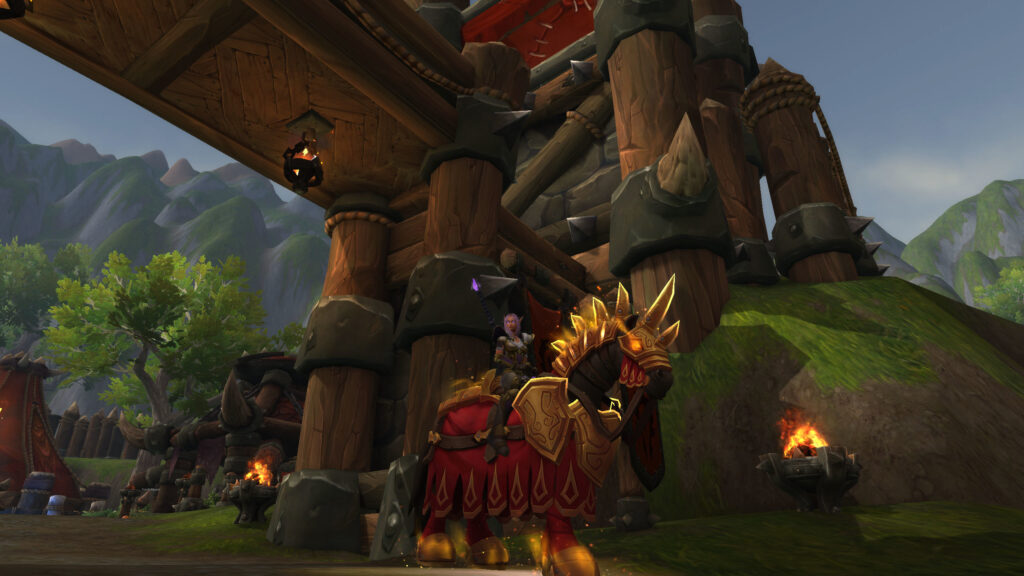
Battle for Azeroth B.F.A. initially struggled due to flaws in its core Systemic Innovation, primarily the Azerite and Artifact Power grind. This diluted the Narrative Cohesion early on by forcing engagement with disliked mechanics. However, B.F.A. eventually introduced highly successful content in its later patches, specifically the Horrific Visions and the Ny’alotha raid. The later content demonstrated significantly improved Post-Launch Content Density, refining the core systems into a highly rewarding loop that many players disengaged from prematurely, missing the expansion’s strongest period.
The Case of Cataclysm: Systemic Overhaul and Fractured Narrative
Cataclysm delivered the largest single Systemic Innovation in the game’s history—the complete overhaul of the original world. While critically necessary, this shift alienated segments of the player base. The expansion suffered from fractured Narrative Cohesion, attempting to juggle numerous disconnected zone storylines. Despite this, its later raid content, particularly Firelands, remains highly regarded for its encounter design, suggesting that the expansion’s overall negative reception overshadowed periods of high content quality.
Overlooked Content Assets in Underestimated Expansions
The following list details specific, high quality assets that were critically overlooked due to broader expansion context:
- **Warlords of Draenor:** The Questing experience in Shadowmoon Valley and Gorgrond is consistently rated for its high Narrative Cohesion and streamlined pacing.
- **Battle for Azeroth:** Operation Mechagon is cited as a pinnacle of Systemic Innovation in dungeon design, offering both a high quality narrative and complex mechanical execution.
- **Cataclysm:** The Firelands raid tier demonstrated exceptional mechanical Execution Complexity and set a new standard for encounter design.
- **Mists of Pandaria:** The Timeless Isle represented a successful paradigm shift toward open world, flexible engagement systems, influencing subsequent open world design.
- **Shadowlands:** The Torghast procedural content, despite initial flaws, provided a unique and often compelling rogue-like Systemic Innovation framework.
Conclusion: Contextualizing Flawed Success

Expansions often labeled as failures frequently contain highly successful content and systems that were simply deployed within a problematic framework. Warlords of Draenor’s strong foundational quest design and B.F.A.’s refined endgame systems exemplify this. Players who disengage based on initial negative reviews risk missing the structural refinements and high quality Post-Launch Content Density that define an expansion’s final, and often strongest, operational period.